From Lead to Booked Work: A Sales Playbook for Restylers and Upfitters
A customer calls about leather seats. Your team knows the product, knows the installation process, and can explain the available options. But do they know why this customer wants leather?
Michelle Garcia offered a simple example during an AutoStyle Sales training: a family is working within a budget, and the car's interior keeps getting dirty. That conversation should start with the vehicle and the family's needs—not a tour of every interior option you sell.
The same principle applies when a dealership wants help selling vehicles or a fleet operator needs vans ready for work. Understand the job the buyer needs done. Recommend what fits. Then make a clear commitment about what happens next.
Drawing on Jessica Crossman's and Michelle Garcia's practical guidance, here is how to move from a product conversation to booked work across retail, dealership, and fleet sales.
Watch the Full Webinar
Loading the video connects to YouTube. You can also watch the webinar on YouTube.
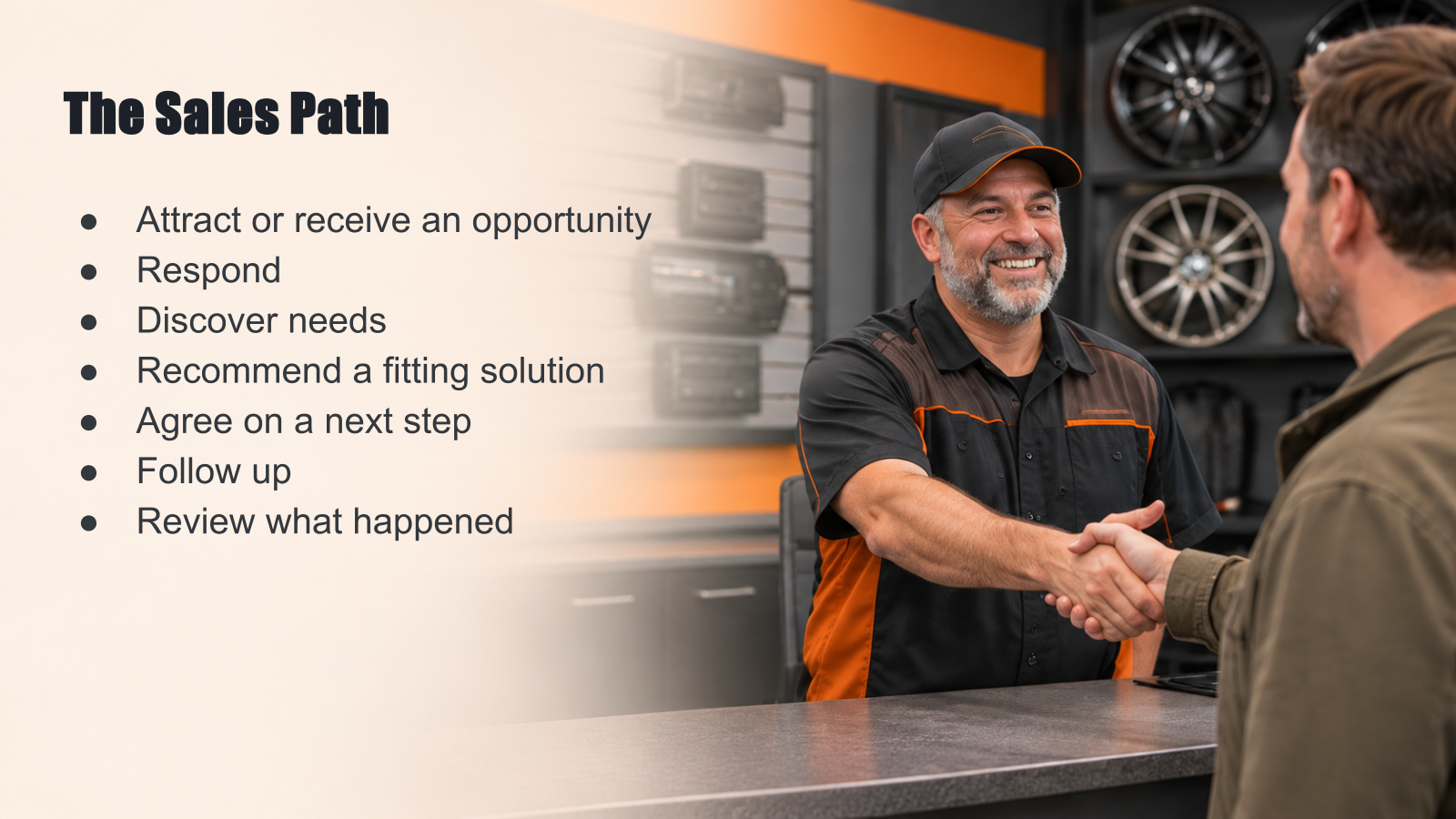
Retail: Find the Reason Behind the Price Question
When someone asks how much, answer the question—but get enough information to make the answer useful. Michelle starts with the vehicle's year, make, and model, then asks why the customer called. That establishes the basics without turning the conversation into an interrogation.
In her family-car example, the customer is considering leather because of a dirty interior. The salesperson's job is to understand that concern, explain a suitable package and its cost, and stay within the customer's priorities. Leading with elaborate designs or unrelated upgrades would miss the point.
Jessica adds a question that can save a lot of wasted explanation: what does the customer dislike or want to avoid? If you spend ten minutes praising an option the buyer has already ruled out, more product knowledge will not rescue the conversation.
“So listening to the customer, I think, is the goal here.” — Jessica Crossman
Narrow the choices around what you heard. Explain the recommendation in terms the customer cares about, rather than relying on a list of specifications to make the value obvious.
Do Not Explain Everything and Forget to Ask
“You ask for the sale.” — Michelle Garcia
Michelle's reminder is short because the step is easy to overlook. A helpful conversation can still end without a decision or a commitment.
If the customer is ready, ask to move ahead. If they need a written estimate, a vehicle inspection, or time to decide, agree on that next step and when it will happen. Clear does not have to mean pushy. It means neither side is left guessing.
Record the vehicle, the customer's main concern, the option discussed, what you promised, and who will follow up. If a teammate takes the next call, the customer should not have to start over.

Dealerships: Help Sell the Vehicle, Not Just the Accessory
“You're no longer just trying to sell them accessories. You're helping them try to sell vehicles.” — Jessica Crossman
That changes how you prepare for a dealership visit. Instead of arriving with the same product list for every store, look for an opportunity in that dealership's inventory and customer conversations.
The RAV4 Buyer Who Wants Leather—but Not a Sunroof
Jessica used a RAV4 example: the customer wants leather but does not want the sunroof and other features on the fully equipped vehicle. That is an opening to discuss whether an aftermarket leather package on a suitable vehicle could meet the buyer's needs.
The conversation is no longer about adding something just because you sell it. It is about giving the dealership another way to address what a customer actually asked for. Verify the vehicle, product compatibility, and package details before proposing it; do not assume a particular trim comparison or savings figure.
Ask the sales staff what buyers have been requesting. Ask the manager which vehicles need attention. Then present a specific package with clear dealer cost, installation scope, and a proposed retail price for the dealership to consider. Discuss the potential gross profit without promising a result.
Check the Website, Then Check the Lot
“I physically look at all the inventory that they have on the lot just to see if it reflects what it did online.” — Michelle Garcia
Michelle described reviewing a dealership's online presence and managers' names before visiting, then walking the lot. Online listings are a starting point, not the whole picture.
If the inventory does not match, ask about incoming vehicles, off-site storage, and units still being prepared. Do not assume an empty row proves strong demand or that an unavailable online listing means the vehicle sold.
Jessica made a related point: two dealerships selling the same brand may have different best-selling models. A package built around RAV4s at one Toyota store may not be the right opening at a store focused on Tacomas. Find out before you pitch.
Start With One Stock Number and a Package Staff Can Explain
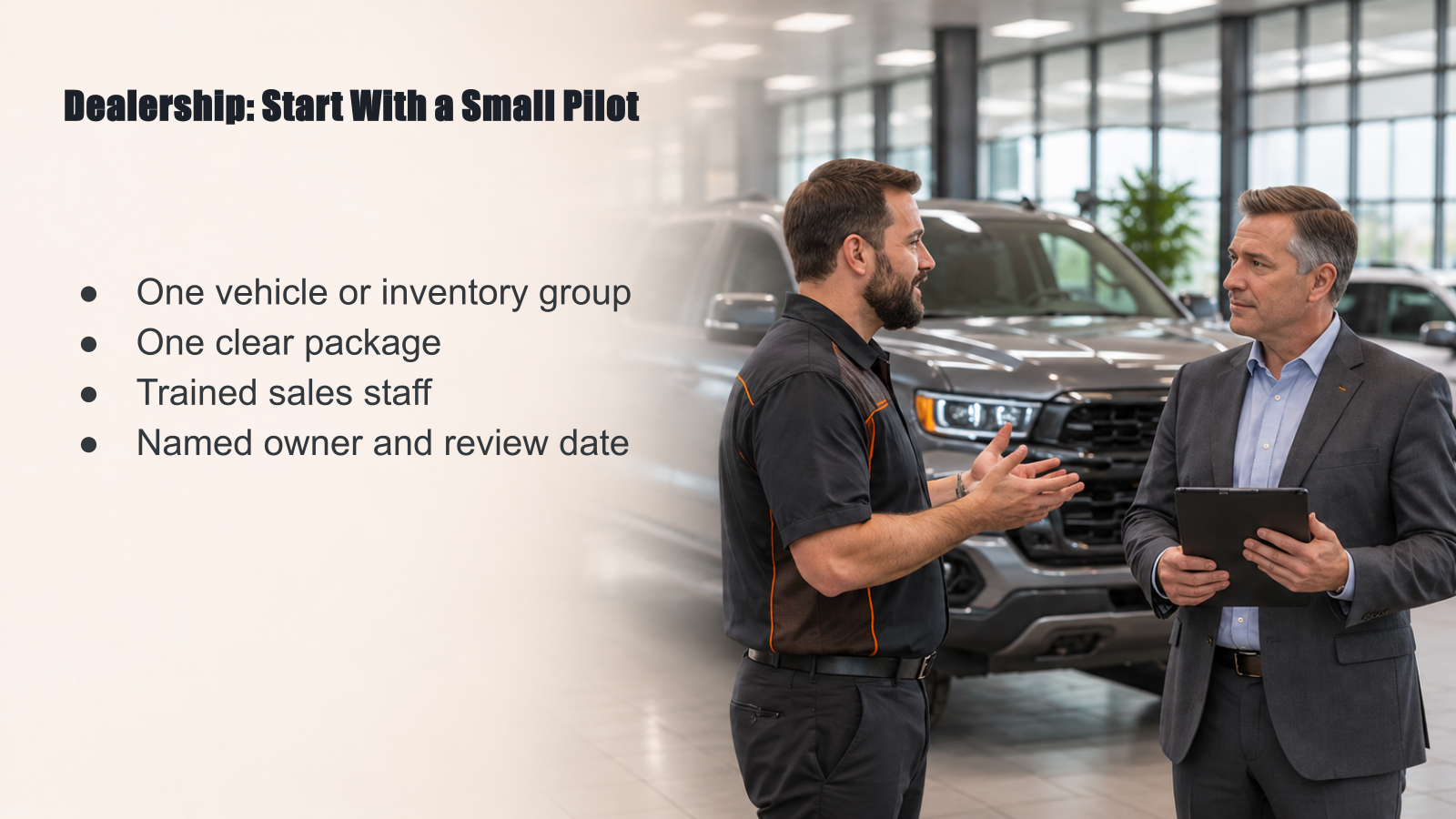
For an initial pilot, choose one vehicle or a small, manageable group. Jessica recommends starting with one or two products that the salespeople can understand and explain—not overwhelming newer staff with aftermarket options while they are still learning factory equipment.
Confirm the stock number, package, and price in writing. Name the person responsible for each next step and set a review date. Once the equipped vehicle returns, give the team a simple description of what was installed and how to present it.
“You show them physically what's on the car.” — Michelle Garcia
Michelle described joining early sales meetings with coffee and bagels, then walking the team around the actual vehicle. For a leather package, open the door. Show the interior. Explain what changed from the original configuration and how a salesperson can demonstrate it to a buyer. Give staff clear pricing and ordering information, and involve the sales manager so the training is reinforced after you leave.
The Two-Copy Addendum: A Small Detail That Helps the Handoff
Jessica described an easy-to-miss problem: your driver returns an equipped vehicle while the sales manager is busy with a deal. The additions may not have made it into the dealership's system, and the salesperson who later shows the vehicle may not know what was installed.
Her practical suggestion is to provide a clear addendum and print two copies: one for the vehicle and one for the deal jacket. If the vehicle's copy gets removed during cleanup, the other copy is still available.
Also identify who received the vehicle and confirm the handoff with that person. Returning the keys is not the same as making sure the team has the package details, pricing, and information needed to sell it.
“You should have a relationship with multiple people at the dealership, not just who you think is the decision maker because of a title.” — Jessica Crossman
That includes the people who explain the product, approve the work, prepare the paperwork, and handle the vehicle—not only the manager who agreed to the first package.
Then review the pilot. Jessica suggested watching the stock number online and asking about it when the listing disappears. Confirm whether it sold. Ask the salesperson what the customer liked, then ask the manager whether the deal worked for the store. Use those answers to shape the next package.
Fleet: Build Around the Technician's Workday
A fleet quote can look complete and still miss the application. Before recommending shelving, partitions, or ladder racks, find out who will use the vehicle and what their day looks like.
In the training's example of three Transit vans for HVAC technicians, Jessica asked whether one technician stays with a van or whether people rotate between vehicles. She also wanted to know what had failed in previous upfits.
“So, find out one, do you need it? Two, how are you going to use it?” — Jessica Crossman
The Ladder Rack That the Technician Cannot Reach
Jessica illustrated the point with a Transit 250 mid-roof van. A three-bar ladder rack may not work well for a shorter technician who cannot comfortably reach it. A suitable drop-down rack could be an option to evaluate.
That is a teaching example, not a universal equipment prescription. Confirm the actual vehicle, ladder, user, installation requirements, and operating conditions before recommending a setup.
Location matters, too. A technician unloading on a busy city street has different access constraints from someone working on a quiet suburban street. Ask where and how the ladder comes off, not just whether the customer wants a rack.
Bring the Users Into the Conversation
Jessica also cautioned that an owner can approve features the technicians will not use. A conversation with the people doing the work may reveal that a shelf or lockable cabinet matters more than a more elaborate arrangement.
The owner still makes the purchasing decision. The technicians help you understand the work. Include both perspectives before finalizing the recommendation.
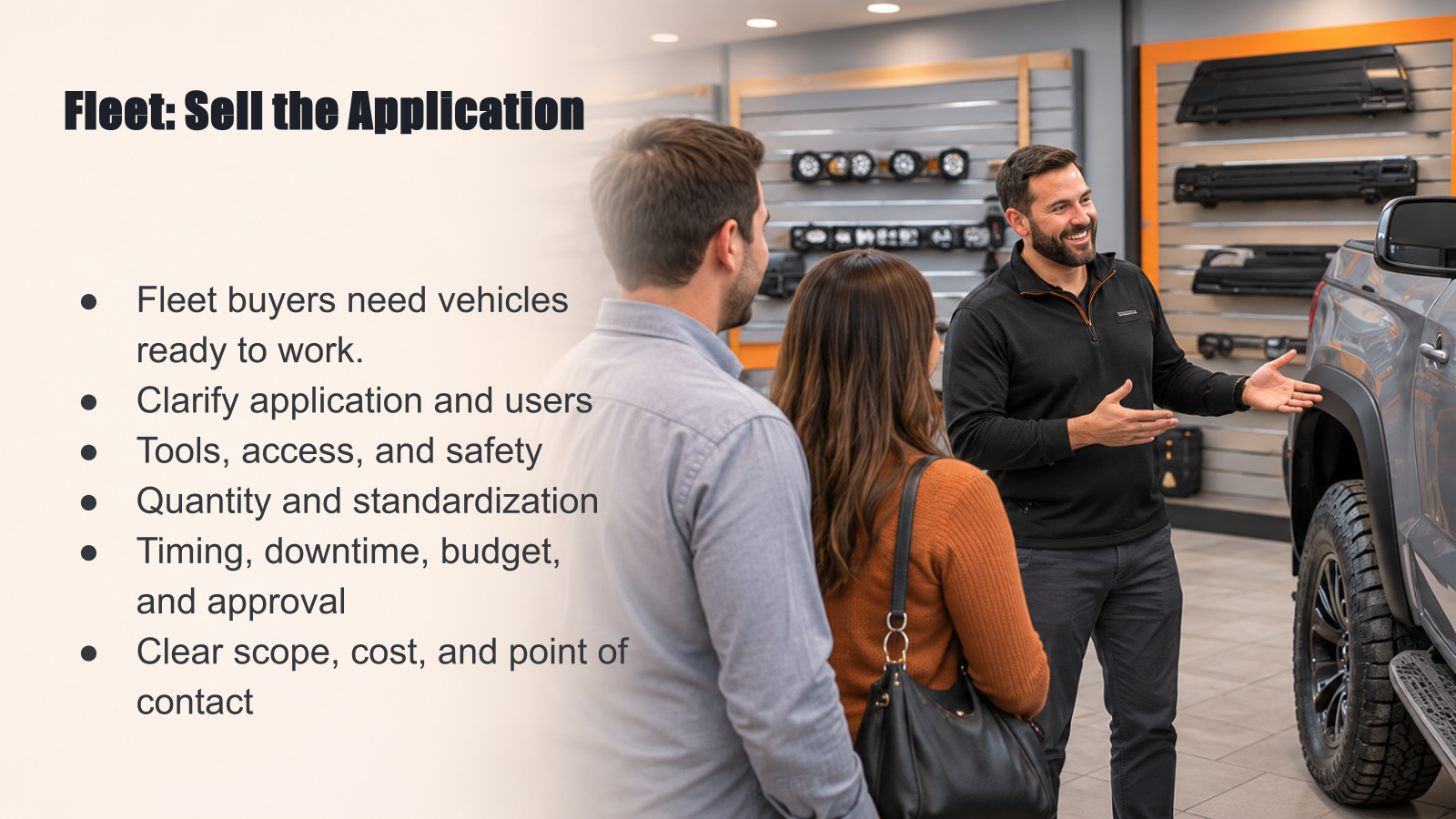
For multiple vehicles, clarify what should be consistent. If technicians regularly switch vans, matching layouts may make sense. If the vehicles serve different roles, some equipment may need to differ. Before quoting, confirm:
- Who uses each vehicle and whether technicians rotate.
- Which tools and materials travel, and how users need to reach them.
- What worked—and what did not—in the previous setup.
- The required in-service date, installation window, and approval process.
Check applicable safety and installation requirements for the specific job. The goal is a vehicle that fits the work, not simply a longer equipment list.
Make the Next Promise Visible
Across all three sales channels, the basic path stays the same: receive the opportunity, respond, discover the need, recommend what fits, agree on the next step, follow up, and review what happened.
The CRM should make that path visible. It should show what the buyer needs, what was promised, who owns the next contact, and when it is due.
Maham Fatima described checking two things: what happened during the call and what happened afterward in the CRM. Did the team send the estimate it promised? Did someone confirm the appointment? If another person took over, did they have the context? That comparison gives a manager something specific to coach without making everyone sound scripted.
Try One Improvement This Week
Choose one habit from this playbook rather than trying to change the entire sales process at once:
- Retail: record the customer's reason for calling—not just the product requested—and agree on the next step.
- Dealership: send the pilot vehicle back with its addendum, a named handoff, and a staff walkaround.
- Fleet: speak with someone who will operate the equipment before finalizing the quote.
Name an owner, set a review date, and look at actual conversations and follow-through. Keep what works and adjust what does not.
Build a Sales Process Your Team Can Use
AutoStyle Sales helps restylers and upfitters work on the conversations, follow-through, and team habits behind their retail, dealership, and fleet sales.
If you want help identifying where opportunities are stalling, talk with us about your team. We can discuss your shop’s situation and whether a Sales Performance Review or coaching is the right next step.